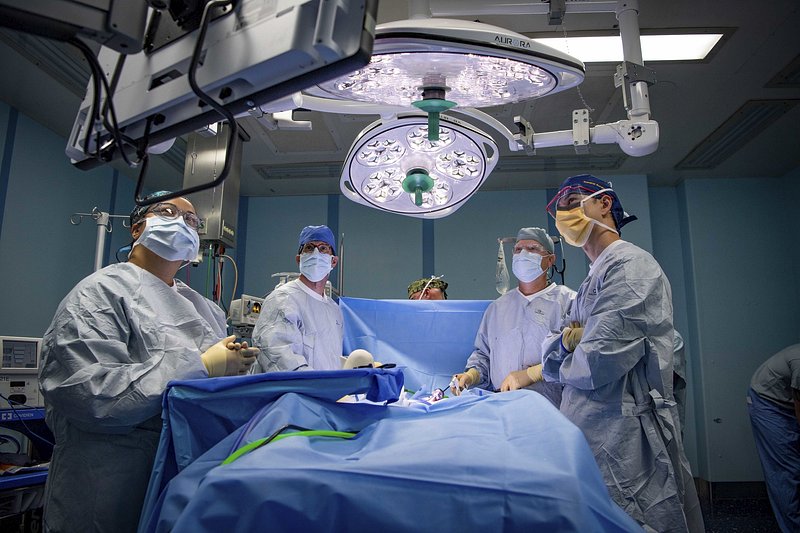

From miniature robots to fully automated surgery tables – robotics and artificial intelligence have been revolutionizing the healthcare industry in remarkable ways. Robotics in Medicine is a term now widely used to describe advanced methods of medical procedures and proper patient care. This article will delve into the various ways that innovative robotics technology is reshaping the healthcare industry and how it is advancing surgeries and improving patient care.
1. The Future of Medical Care: Robotics in Medicine
With advances in technology, it’s become increasingly apparent that robotics offers the possibility of a new future of medical care. Robots are being used in a range of medical applications, from surgery to prosthetic limbs. Here’s a brief look at some of the most promising robotic advancements in medicine:
- Robotic Surgery: Robotic-assisted surgery for a variety of procedures has been an area of focus in recent years, offering the potential for faster, safer, and more precise surgery. With the help of surgical robots, doctors have been able to perform complex operations with a high degree of accuracy and precision.
- Prosthetics: Prosthetics are becoming increasingly advanced, due to advances in robotics. Robotic prosthetics allow people to regain a degree of mobility that they would otherwise be denied due to their disability. In addition, robotic prosthetics can provide a functional level of precision that would be unattainable with a human user.
- Rehabilitation: Rehabilitation robots are providing a new level of therapeutic assistance for patients with a variety of conditions. These robots can be programmed to provide physical exercises that are tailored to a patient’s needs, allowing for more efficient healing and rehabilitation.
These are just a few examples of how robots are advancing medical care, and it’s only the beginning. With further technological developments, robotics will likely continue to play a larger role in the future of medicine.
Robotics are also being used to improve the efficiency of medical diagnosis and treatment. For example, robots can be used to improve the accuracy and speed of diagnosis by analyzing medical imaging data. In addition, robotic arms can be used to increase the precision and accuracy of medical treatments.
2. Pioneering the Way: How Robotics is Changing Surgery
Robotics technology has made significant advancements in the medical healthcare arena, revolutionizing the way surgeries, treatments and diagnoses run. Upon first glance, the thought of a robotic-centred surgery may invoke a sense of sci-fi-inspired dread. However, research behind robotic-powered healthcare has proven to be a safer, more precise approach to performing traditional surgeries.
Robotics can make precise incisions, greatly reduce the risk of infection, optimize quality of care, reduce recovery time, and offer an all-round more successful surgery. These machines are designed to mirror the human hand, and are kitted out with advanced cameras, 3D mapping and complex algorithms.
- Optimizing Quality Care: Robotics allow surgeons to take advantage of proven technologies, increasing efficiency and decreasing errors
- Minimizing Invasiveness: Robots work with extraordinary accuracy and agility, ensuring minimal disruption to neighbouring tissue
- Safer Surgery: Robotics can guarantee uniform accuracy in even the most precise and potentially challenging operations
Robotic surgeries have now become a mainstream reality, managing surgical outcomes and providing real-time data to gain detailed insights into the conditions being treated. Robotics has provided medical professionals with many incredible capabilities, revolutionizing the procedure of surgery…for the better.
3. Enhancing Accuracy: Robotics and Minimally Invasive Surgery
The medical world is advancing at a rapid pace thanks to robotics and minimally invasive surgery. These innovative technologies are revolutionizing how accurate and efficient medical procedures can be. They provide patients with the best possible care while reducing the time it takes to perform treatments.
Robotics: From soft tissue surgery to hip replacements, the use of robotics in healthcare is growing exponentially. Robot-assisted surgeries help doctors to perform operations with greater accuracy and precision. This means that doctors are able to target specific areas while avoiding healthy tissue. Additionally, robotic surgeries reduce the risk of complications and speed up recovery times, allowing patients to return to normal life faster.
Minimally Invasive Surgery: Minimally invasive surgery is a technique that reduces the size of incisions and trauma to surrounding tissue. This type of surgery is often performed with the assistance of specialized instruments and requires smaller incisions. As a result, the procedure is less invasive and leads to a quicker recovery time. Patients experience less discomfort and reduced risk of infection.
- Robotics help to accurately target specific areas and improve outcomes
- Minimally invasive surgery reduces trauma to surrounding tissue
- Smaller incisions lead to quicker recovery times
- Both techniques increase the accuracy and efficiency of medical procedures
Robotics and minimally invasive surgery are transforming the healthcare industry and providing patients with the best possible care. By using advanced technologies, doctors can perform precise, effective treatments and help their patients return to better health.
4. The Benefits of Robotics for Patient Care
Robotics are making strides in the world of health care. This technology has provided an insight into patient care that could not have been possible before. There are numerous benefits to be had from the use of robotics in health care and these include:
- Improving Accuracy: Machines are much more accurate than humans when it comes to routine medical tasks such as drawing blood or administering medication. This helps reduce complications and provide doctors with more reliable data.
- Decreasing Surgical Errors: Robotic arms are capable of performing incredibly precise movements, which helps to minimize human error during complex surgeries.
- Providing Assistance When Needed: Robotic arms can be used to help with things such as dressing and bathing, which can be of great assistance for physically disabled patients.
- Decreasing Fatigue: Robotic technology can reduce the amount of physical strain that is often placed on nurses and other health care professionals while providing services to patients.
Even with all these advantages of robotics in health care, there are also potential issues that must be taken into consideration. Robotic technology can be costly, and the availability of trained professionals to use it may be limited in some places.
Overall, the use of robotics in health care can provide a beneficial way of providing patient care. With the decrease in mistakes, more reliable results, and assistance with tasks, robotics can revolutionize how health care providers interact with their patients.
5. Exploring the Ethical Questions Surrounding Robotics in Medicine
Robotics in medicine presents both great promise for optimization, precision and minimally invasive surgeries, but also surfaces ethical considerations that must be thought through. With great promise comes difficult questions that need to be asked and answered in order to ensure technology is used ethically in the service of humanity.
Beneficence: Robotic-assisted technology provide many benefits to both practitioners and patients. Robots are able to assist with precision and accuracy in situations not possible using manual techniques. This technology can limit health risks to both surgeon and patient by reducing fatigue, providing improved dexterity, and enhancing visibility. The ultimate goal of any technology is to aid the surgeon in providing an increased level of care to patients.
Autonomy: Many ethical questions have been raised about the capability of robots to make decisions and perform tasks without the input of either a patient or practitioner. Furthermore, there are concerns regarding the capability of robots to override the will of a patient in certain medical contexts. This possibility raises questions such as whether or not a patient has the right to refuse robotic assistance and whether these decisions can be made without the consent of the patient.
Justice: The use and availability of robotic technology can cause discrepancies in healthcare. The cost effectiveness and accuracy of robotic technology can create an imbalance of access for certain parts of the population that may not have access to the treatments needed. This raises ethical questions about whether the technology should be available to everyone, regardless of financial or social status. Additionally, questions arise around how to ensure that the technology is used fairly and ethically in all medical contexts.
These are a few ethical questions raised by the use of robotics in medicine. Issues such as these need to be addressed if we are to ensure that medical technology is used in a beneficial, safe, and ethical manner.
6. Robotics Taking the Lead: Looking Ahead to the Future of Healthcare
Robotics is playing a rapidly-expanding role in medical care, and it has some truly astonishing implications for the world of healthcare. We’re rapidly entering an era of unprecedented precision and accuracy in the diagnosis and treatment of patients, offering a brave new future of efficiency and efficacy promises.
Scalable Efficiency Through Automation
From small-scale surgery robots to automation of more mundane clinical tasks, robotics is helping health professionals take on a higher load of patients while giving better quality care. This kind of robotic scaling has the potential to revolutionize the way advances and discoveries are made in medical science, allowing medical professionals to focus on understanding disease and medical application issues better.
Safer Surgery, Better Outcomes
Robotic assisted surgeries are rapidly becoming the norm in health care, offering outcomes that are more precise while reducing the invasiveness of surgery – thereby reducing the risk of further health complications and infections. This kind of precision makes it easier to work in delicate areas of the body, while offering greater chances of success and reduced risk of error.
- In the near future, robotic arms will be used to lift heavy objects, open containers and even turn off valves, ensuring that mundane, dangerous or strenuous tasks become more efficient.
- Complex tasks, such as extracting tumors, implanting implants or adjusting joints may be handled more accurately, quickly and with greater safety than ever before.
- Intricate operations may be performed in hard to reach places without the risk of tissue damage, with multiple operations conducted together.
Robotics in health care is already advancing at an impressive pace. It won’t be long before robotic systems become an indispensable part of the health care landscape, from medical centers to the home and beyond.
Robotics is disrupting the way medical practices are carried out — and advancing the way lives are saved. With the help of robotics, complex and intricate surgeries can be completed with confidence and precision. In the end, the patient can now look forward to improved outcomes and better quality of life. All of us here at [Company Name] are excited to see the possibilities of robotics in medicine continue to grow – and look forward to seeing what the future brings.